THIMUN

The Hague 2012

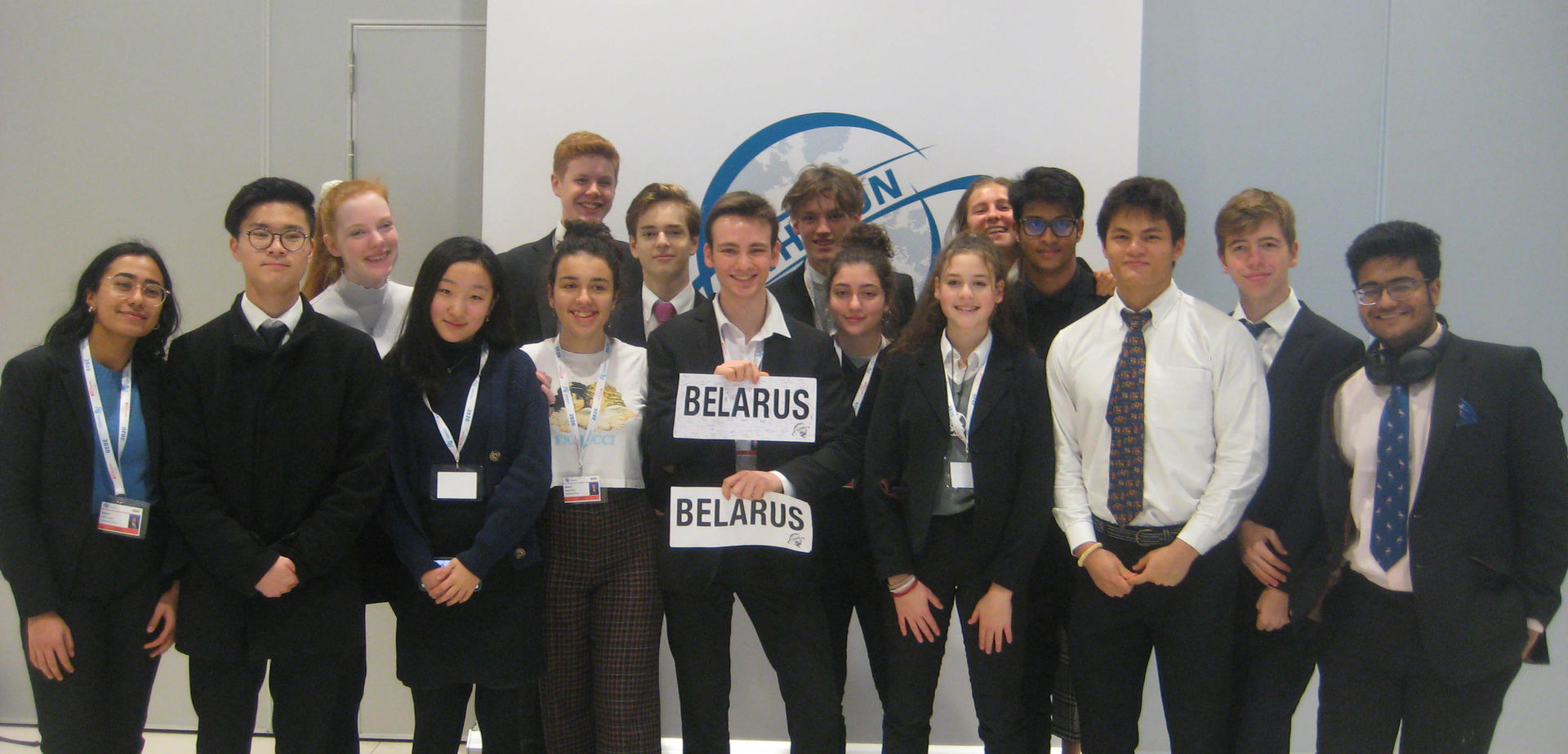
The Hague International Model United Nations (THIMUN) conference is one of the largest and most prestigious global youth events and each year attracts over 3000 delegates from around the world who gather to debate and propose solutions to the most pressing issues currently facing mankind. The 2012 edition had a theme of ‘Seas and Oceans’ and proved to be another resounding success for the Sevenoaks delegation: Lottie Abrahams, Michele Bos, Kenza Bryan, Maira Chowdhury, Benedict Durrant, Ayman El-Farouki, Nicolas Grunberg, Thomas Hughes, Khush James, Ishaan Jhaveri, Victoria King, Jack Smith, Jake Spence, Anna Turner-Major, Laurence Warner and Zoe Wedderburn-Day. Sevenoaks represented Senegal. Preparatory research was exemplary from all delegates and our Ambassador Lottie Abrahams was in touch with the Senegalese embassy in London in order to consolidate and confirm delegation policy.

On Monday morning, after a vibrant opening ceremony with an inspiring keynote speech from the renowned oceanographer and explorer Dr Sylvia Earle and a flag procession in which staff from every embassy in The Hague passed over their national flag to the delegation Ambassadors, the conference at the prestigious World Forum building officially began.

The rest of the day was devoted to the process of lobbying, which involves delegates gathering support for their resolutions and merging ideas with others. This severely tests the persuasive and political skills of the students as well as being a test of mental endurance. By the end of the day, a number of Sevenoaks students had emerged with enough support to be ‘main submitters’ of resolutions to be debated over the following four days. Kenza Bryan led a resolution on sustainable development of the Caribbean Sea, Anna Turner-Major on development in Africa, Maira Chowdury on forensic genetics, Laurence Warner on the naval strength of BRIC countries and Jake Spence on chemical weapons. Moreover, virtually all other members of the THIMUN team played vital roles in canvassing for and speaking on constructive resolutions which employed many of their clauses as the primary co-submitter.

Senegal’s constructive stance as a progressive African delegation coupled with the exceptionally strong public speaking skills of the team enabled them to ensure that they were regularly selected to make points of information and take the platform, through chair selection and the yielding process. Despite the fact that applause following a speech is not permitted by THIMUN rules, Jake Spence’s opening speech in support of his resolution was met by spontaneous clapping which was allowed by the Chair due to the sheer quality of the speech. We were therefore delighted with the collaborative effort of the delegation as a whole.

On Tuesday evening in accordance with the theme of the conference we returned to the World Forum to watch The End of the Line, a powerful documentary about the effects of over-fishing, followed by a Q and A session with the director Rupert Murray. The film also provided a fascinating insight into the human and natural impacts of the international fishing industry on Senegal and was an educational experience for all.

Additionally there were opportunities to learn more about the way in which The Hague operates as a judicial centre, as on Wednesday afternoon Sevenoaks students were privileged to be given a tour of the International Criminal Court. Our students found this experience fascinating and the intelligent nature of their questions led the ICC official giving the talk – Dr Antonia de Sousa – to invite any who might be interested to apply for a summer internship at the ICC.

We returned to London late on Friday evening after a week which was wet, windy and grey in The Hague, but the immediacy, intensity and excitement of five days spent in debate and negotiation meant that the weather conditions were barely even noticed. Congratulations to all the THIMUN team.

Charlotte Glanville and Alex Patton

The Hague 2011

The 2011 THIMUN conference, with a theme of Crime and Punishment, proved to be another resounding success for the Sevenoaks delegation, who represented Ghana.

Preparatory research was exemplary from all delegates and our Ambassador Thomas McGee even managed to secure an interview with the real Ambassador for Ghana at the embassy in London, so as to consolidate and confirm delegation policy and ensure that his excellent opening speech was well-pitched.

On Monday morning after a rousing opening ceremony with a key note speech from the Chair of the ICJY and a moving flag procession in which staff from every embassy in The Hague passed over their national flag to the delegation Ambassadors, the 3000-strong delegate conference at the prestigious World Forum officially began.

Lobbying was fast and furious with the following delegates gaining sufficient support to push through their resolutions as main submitters: Aditya Ranjan in Disarmament Commission 2, James White in Human Rights Commission 1, Freya Mead in Human Rights Commission 2, Matthew Hitchens in Special Conference on Crime and Punishment Commission 1, Alexandra Abrahams in GA3, Harriet Rudd-Jones in GA4, and Katy Barrett in GA6.

As soon as debating began Ghana’s constructive stance, coupled with the strong public speaking skills of the team, enabled them to ensure that they were regularly selected to make points of information and take the platform, through chair selection and the yielding process. We were delighted with the collaborative effort of the delegation as a whole, but special mentions go to Katy Barrett, Harriet Rudd-Jones, Freya Mead and Matthew Hitchens, all of whom managed to pass their resolutions with an overwhelming majority vote. All were selected for plenary debate, but time constraints meant that Matthew and Freya were the only ones to see their resolutions debated in plenary where they once again passed with a superb majority.

The week was intense, but there were also opportunities to learn more about the way in which The Hague operates as a judicial centre; on Tuesday evening we watched a ground-breaking drama documentary on the workings of the ICJY and the impact that a high profile case can have on witnesses, followed by a Q and A session with the Producer and chair of the ICJY. On Wednesday afternoon Sevenoaks students were privileged to be given a talk at the International Court of Justice about its mechanisms and functions, as well as being given an overview of some prominent case histories. Our students found this experience fascinating especially as MUN naturally attracts a number of students who aspire to legal or diplomatic careers in the future.

We returned to London late on Friday night, but all agreed that the week in THIMUN had been enormously stimulating. The Sevenoaks cohort felt both empowered and humbled by the week they had in The Hague and the following words from one delegate seemed to sum up the attitude of the delegation as a whole: ‘The experience was phenomenal; the opportunity was a once in a lifetime chance to discuss alleviating the world from its greatest problems, whilst learning the confidence building skills of networking and heated public debate.’

Sevenoaks delegation: Alexandra Abrahams, Katherine Barrett, Sophie Bird, Benjamin Gerstmeyr, Matthew Hitchens, Alison Lam, Thomas McGee, Freya Mead, Fleur Nash, Aditya Ranjan, Cecely Richard-Carvajel, Harriet Rudd-Jones, Thomas Waterhouse, James White, Mark Wong, Megan Yeates

The Hague 2011 photos:

THIMUN 2010

The theme of this year’s most prestigious international MUN conference – THIMUN- was Good Governance. As delegates representing the little known Cote D’Ivoire, Sevenoaks students faced the world’s superpowers and MDCs with characteristic intelligence and discernment. During the course of the week our 16-strong delegation pushed through seven resolutions and saw two resolutions reach the plenary sessions on the final day of debating.

The event began with an opening ceremony drawing attention to the immediate challenges faced by the world. Opening speeches were made by the Ambassadors of all of the different delegations and our own ambassador, Francesca Danczak, delivered a measured and eloquent speech on the situation of the Cote D’Ivoire and what it hoped to achieve through the conference.

Monday and Tuesday were dedicated to intense lobbying and merging of resolutions and in the General Assembly Committees, ECOSOC, Human Rights Commission, Disarmament Commission, Environment Commission and Special Conference on Good Governance, delegates for the Cote D’Ivoire were notably strong negotiators. The majority of our delegates emerged as main submitters for their own resolutions. The second part of the week was dedicated to debating sessions in the different committee venues and Sevenoaks students emerged as some of the most lucid and impressive speakers. Out of the 200-strong delegations present at the conference, common consensus put the Cote D’Ivoire within the top five delegations.

Overall the intense week at THIMUN was both enjoyable and instructive and while there was little opportunity to see anything of The Hague itself, Sevenoaks students forged new friendships with students from schools around the world, while gaining further insight into the mechanisms of the UN and the complex processes through which change is brokered. A huge congratulations to the entire THIMUN team!