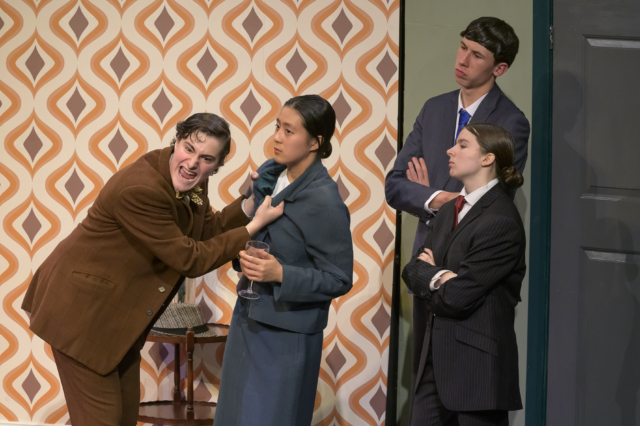
Warnings and Consequences was comprised of four sections of plays (Before Breakfast, Warnings, Fog and Thirst) by Eugene O’Neil, who is known as the grandfather of Modern American drama and influenced many American playwrights such as Tennessee Williams. It was exciting to work with a text and format that was different from the other productions I had done, pushing me out of my comfort zone.
Each section of the individual plays chosen allowed for each one to have its own message but to be connected by similar themes and settings. Before Breakfast, was about a married couple who were on a downward spiral as they tried to face reality, tackling themes of poverty and despair at the hardships of reality. Warnings (broken into two scenes) explored themes of morality as a ship’s wireless operator who was losing his hearing, and had to make a decision on whether to continue with his job that he could no longer do. Fog and Thirst were both about people stranded at sea and tackled similar themes of class, isolation and the power of nature. Together these plays created a captivating performance.
The play was performed in-the-round in Drama studio, a perfect choice for this play as it allowed an intimate performance. In order to transform the space into four different locations we had to be creative with the use of props and lighting. For example, an LED strip outlined the stage and was a different colour for each play. We also used a variety of props from wooden apple crates to hanging windows. The manoeuvring of the props did take a few rehearsals to master but in the end I think it worked perfectly.
The first two one acts, Before Breakfast and Warnings were performed one after each other, with the set changes and stage directions breaking them up. However, the last two acts were performed flipping between the scenes, keeping the audience engaged and allowed for parallels to be drawn between the two plays.
As well as using the props to set the scene, our director, Ms Wessels, had the genius idea of having the cast recite the stage directions in the script. This convention allowed for the characters to be introduced and for context to be given. It was also a key part in honouring O’Neil’s work, as he was one of the first playwrights to have extensive stage directions about the characters and the set.
I want to say a big thanks to our amazing director, Ms Wessels who beautifully crafted this performance into an unforgettable experience.
Find photos here.
Ruby Thomas, L6